Sunday, May 1, 2016

dfsds

s

Thursday, August 27, 2015

HTC One E9+ review

Introduction

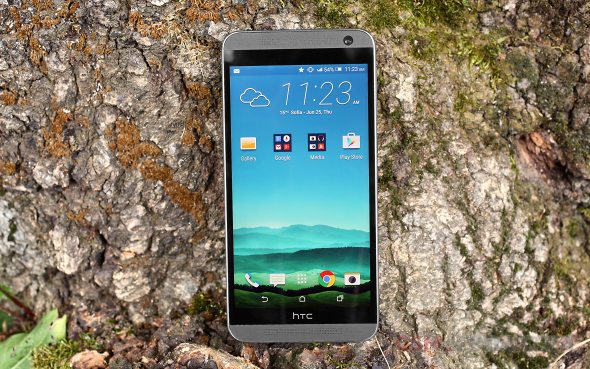
If you want HTC's highest-specced, big-screened QHD smartphone, the One E9+ is very likely the one you're looking for. Only the lack of the signature all-metal unibody saves the company's reigning flagship a good deal of embarrassment.
HTC One E9+
It's quite hard to actually decide which precise model sits atop HTC's 2015 One lineup, and there may well be more than one correct answer. You have the M9, obviously, which has Qualcomm's latest chipset inside and the metal design to appeal to your sense of style, but sticks with a FullHD 5-inch screen.
Midway up the size ladder, you'll find the 5.2-inch QHD M9+, which retains the metal unibody and adds a second camera on the back, as well as a fingerprint sensor, but opts for an arguably inferior Mediatek chipset. There's an almost identical ME version, which comes with a single rear camera, and comes with a polycarbonate body.
All that builds up to the HTC One E9+, which has finally landed in our hands. It has the largest 5.5-inch QHD screen of the bunch (so, not to be confused with the E9, which is apparently a China-only 1080p 5.5-incher), a slightly downclocked version of the same Mediatek chipset and a polycarbonate build.
With the family relations (somewhat) settled, let's move on to the list of key specs.

Key features:

  • Polycarbonate body, soft matte finish, thin and light for its size
  • 5.5" 1440p capacitive touchscreen with 534pi; Corning Gorilla Glass 4
  • Mediatek MT6795M (Helio X10) chipset with a 2GHz octa-core Cortex-A53 CPU, PowerVR G6200 GPU, 3GB of RAM
  • Android 5.0.2 Lollipop with HTC Sense 7 UI
  • Wi-Fi 802.11 a/b/g/n/ac (2.4 & 5 GHz); DLNA, WiFi direct, hotspot
  • 20MP AF camera with a 1/2.3" BSI sensor; 27.8mm f/2.2 lens; single-LED flash; 2160p@30fps video capture, 720p@120fps slow motion
  • 4MP fixed-focus UltraPixel front-facing camera with a BSI sensor; 26.2mm f/2.0 lens; HDR; 1080p video recording
  • 32GB of built-in memory; microSD card slot; 100GB of free Google Drive storage for 2 years
  • Dual nanoSIM slots, LTE Cat.4, GPS/GLONASS/Beidou, NFC, Bluetooth 4.1, FM radio; microUSB 2.0 port, MHL, USB host
  • Active noise cancellation with a dedicated microphone
  • Front-facing stereo speakers with BoomSound and Dolby Audio
  • 2,800mAh battery

Main disadvantages

  • Tall for a 5.5-inch phone, massive top and bottom bezels
  • Non-removable battery
  • Chipset looks more suited to a mid-ranger
You can see why one might get confused. The HTC One E9+ has all the makings of a modern day high-end device, albeit in a rather understated package. And it's not like HTC hasn't done it before, last generation's E8 was just that - a flagship in disguise. Only, now HTC is giving you even more options and it's not a simple price-vs-looks dilemma.
HTC One E9+ HTC One E9+ HTC One E9+ HTC One E9+ 
HTC One E9+ press images
It is, however, the first time we get to see the Mediatek MT6795 in action (also going by the PR-friendly Helio X10). It's an interesting decision by HTC part to equip all its QHD smartphones so far with the Mediatek top-of-the-line solution and reserve the Snapdragon 810 for the FullHD One M9.
We've yet to see what that means in terms of performance, but not before we've unpacked the handset and got a real feel for it in-hand.

Oppo R7 review

Introduction

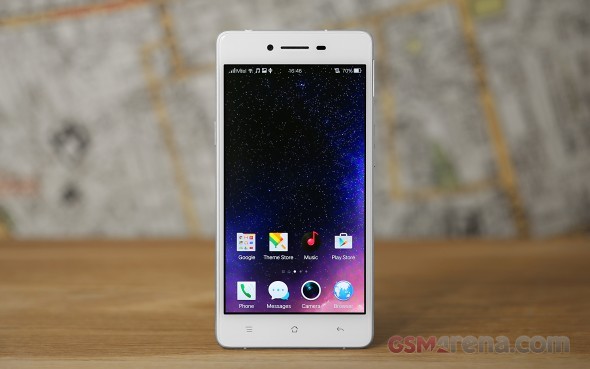
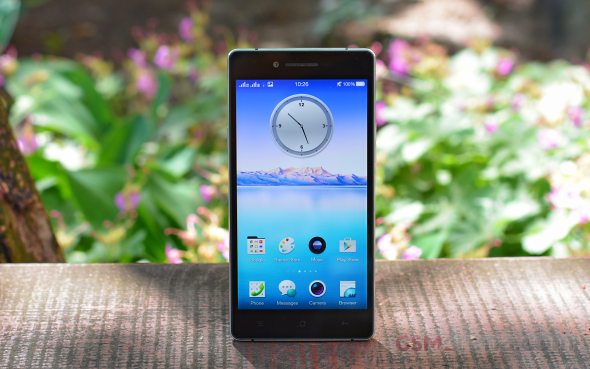
Once the world's slimmest smartphone, the Oppo R5 has found a worthy heir in the face of the new R7. With the crown already forfeited, the company chose to walk out of that fight and made the R7 a touch thicker, but it still has every bit of the upmarket feel of the R5.
Oppo R7
Although it may have lost the wow factor of the razor-thin R5, the R7 is an equally fine-looking smartphone, if not even more so. The metal back with the etched Oppo logo flows into the surrounding frame forming a unibody construction, and the front glass, gently curved at the edges (what has become known as 2.5D), is a pleasure to touch and behold.
By the way, we don't consider the R7 to be a replacement of the R5, as plenty of their hardware is practically shared. It's simply a more balanced device, its priorities gently guided in the right direction. Frankly, the push for slimness at all cost has never been our thing.
Hope you don't get this wrong, at 6.3mm the Oppo R7 is not exactly what you'd call bulky. The extra thickness has allowed for a welcome increase in battery capacity, a major weakness of the 4.85mm R5.
Rumors prior to launch hinted at a bezelless or edge-to-edge display, but this proved not to be the case. The R7 Plus is somewhat closer to that description, although it still doesn't truly amaze.
Instead the R7 packs a 5-inch AMOLED display, a careful step back from the 5.2 inches of the R5. This was perhaps done to clearly separate the R7 from its bigger brother, the 6-inch R7 Plus. Plus, as we said, battery life is now a priority and a slightly trimmed screen should help there, too.
The 3GB of RAM is another notch on the score sheet, and so is the introduction of a microSD slot - most welcome really given the rather limiting 16GB of built-in storage. It's the increasingly more common type, where the memory card shares a slot with the second SIM card - not the most convenient solution, but a compromise most will be willing to make.
We have Snapdragon 615 in charge, and that keeps the R5 firmly grounded in the midrange, regardless of how much RAM Oppo fits, or how spectacular the body looks. That said, the chipset is a proven performer in its class.
The primary camera remains at 13MP but now uses a Samsung ISOCELL sensor instead of Sony's in the R5. It's now graced with a Schneider-Kreuznach-branded lens, though it's gone a bit dimmer. On the front you get a new 8MP shooter, the highest pixel count in the company's lineup, if you leave the rotating N-series out of it.

Key features

  • Dual-SIM dual-standby capability, microSD slot shared with second SIM
  • 5.0" 1080p AMOLED capacitive touchscreen, 445ppi, Gorilla Glass 3
  • Octa-core Cortex-A53 CPU (4x 1.46GHz plus 4x 1.11GHz), 3GB of RAM, Adreno 405 GPU; Qualcomm Snapdragon 615 chipset
  • 13MP phase detection autofocus camera with Samsung ISOCELL sensor, f/2.2 lens, single-LED flash; HDR, Expert, RAW, Panorama, Long exposure (up to 16s), Double exposure, 50MP UltraHD modes
  • 1080@30fps, 1/4x slow motion video recording, 10x speed timelapse
  • 8MP front camera, 1080p video recording
  • 16GB of built-in storage
  • Cat. 4 LTE (150/50Mbps); Wi-Fi b/g/n; Bluetooth 4.0; GPS/GLONASS; microUSB
  • 2,320mAh battery capacity
  • 3.5mm headphone jack, active noise cancellation with a dedicated mic

Main disadvantages

  • Android KitKat 4.4.4 is not great on a newly launched device
  • No FM radio or NFC
  • Non-removable battery
You'd also be happy to learn than the R7 can take standard 3.5mm jack headphones, while the R5 sacrificed that feature in the push for thinness. There's still no FM radio to be found on the new model, but that's more of a niggle than a serious omission.
Oppo says it's working on a Lollipop build for the R7, but it was obviously not ready in time for launch, and we'll try not to hold that against it. ColorOS, on the other hand, has seen a few polishing touches in its 2.1 version, but in essence remains a heavily customized, iOS-inspired Android overlay.
Oppo R7 Oppo R7 Oppo R7 Oppo R7 Oppo R7 
Oppo R7 press images
As you can see, there's plenty to explore underneath the pretty shell, but in typical GSMArena fashion we'll start with the unboxing and hardware overview.

Xiaomi Mi 4i review

Introduction

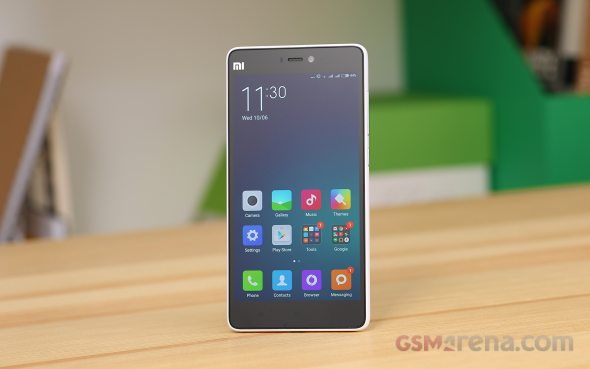
The Xiaomi Mi 4i was designed to be an affordable semi-flagship, but tries to punch above its weight. The Mi 4i is thinner, lighter and more connected than the original, and lands straight on Android Lollipop.
Xiaomi Mi 4i
The Xiaomi Mi 4i shares plenty of DNA with the original Mi 4, some of the hardware duly scaled down for affordability. The software though genuinely tries to make up for it. The Xiaomi Mi 4i boasts a premium 5" IPS 1080p display and a very capable 13MP camera, both shared with the flagship. The Snapdragon 615 chipset with an octa-core processor integrates Cat. 4 LTE with the added benefit of dual-SIM support.
The Mi 4i has to do without the top-of-the-line dual-glass chassis of the original, but its conventional polycarbonate unibody makes it thinner and lighter, without compromising looks and notably improving the grip. Bottom line, the Mi 4i is built to be cheaper but doesn't look it. Plus, you do get the latest MIUI 6 launcher on top of a buttery-smooth Lollipop OS.

Key features

  • Dual-SIM dual-standby capability
  • 5.0" 1080p IPS capacitive touchscreen, 441ppi
  • Octa-core Cortex-A53 CPU (4x 1.7GHz plus 4x 1.0GHz), 2GB of RAM, Adreno 405 GPU; Qualcomm Snapdragon 615 chipset
  • 13MP autofocus camera, dual-LED (dual-tone) flash; HDR, Panorama
  • 1080@30fps, 480p@120fps video recording
  • 16GB of built-in storage
  • Cat. 4 LTE (150/50Mbps); Wi-Fi b/g/n; Bluetooth 4.1; GPS/GLONASS; FM radio; microUSB
  • 3,120 mAh battery capacity
  • 3.5mm headphone jack, active noise cancellation with a dedicated mic
  • Android 5.0.2 with MIUI v6.0

Main disadvantages

  • Limited market availability
  • No memory expansion, limited maximum storage
  • No NFC
  • Non-removable battery
The lack of a microSD slot and non-user-removable battery are bad news, but they come as no surprise given Xiaomi's track record. The lack of Gorilla glass display protection is a bigger concern though Xiaomi promises some scratch resistance for its Corning OGS panels.
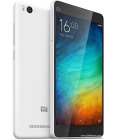
Xiaomi Mi 4i Xiaomi Mi 4i Xiaomi Mi 4i 
Xiaomi Mi 4i official pictures
Anyway, the Xiaomi Mi 4i wouldn't want to be remembered as the low-cost version of the Mi 4. It'll try and convince users it's a needed addition to the Mi lineup - with a more sensible styling but not entirely lacking appeal, and a level of equipment that's well above average in its price range. Let's see what it's really made of, shall we?
Special thanks to HonorBuy.com for providing the review unit.

Sony Xperia Z3+ review

Introduction

The Sony Xperia Z3+ is the Japanese flagship we've all been anticipating, but is it really the one we've been hoping for? Or are the predictable chipset update and minor design touches simply a prelude to a proper upgrade later this year?
Starting with the original Xperia Z in February 2013, Sony's condensed update cycle for the high-end Z-series has meant a spring release was followed by another in the fall, enabling the company to adequately combat competition on either side of the Pacific. Inevitably, each new model carried few improvements over the predecessor, failing to truly wow customers.
Those are considerations for the marketing teams though, and there's obviously no way we could know Sony's precise reasoning. We can, however, work with what we've got, and at this point that's the Xperia Z3+.
A few months behind the obvious major competitors and Sony's own established schedule, the Xperia Z3+ doesn't surprise with hardware. The one major change is the Snapdragon 810 SoC, which brings a performance boost, alongside faster Cat.6 LTE.
Gone is the 16GB base storage option of the current model and the Xperia Z3+ only comes in 32GB flavor. The outdated 2MP front camera couldn't fly on a 2015 high-end smartphone, and it has made way for a new 5.1MP snapper.
A less welcome move has seen the battery capacity taken a notch down from 3,100mAh to 2,930mAh - enabling designers to achieve the highlight 6.9mm thickness and the weight has also been reduced. Points are due for the capless microUSB port too, which made the charging pogo pins redundant, while keeping the IP68 certification intact.

Key features

  • Also available as a Dual SIM version
  • 5.2" IPS LCD, 1080 x 1920 pixels, 424ppi
  • Android 5.0 Lollipop with Xperia UI on top
  • IP68 certified - dust and water proof up to 1.5 meter and 30 minutes
  • Qualcomm Snapdragon 810 chipset with 2 GHz quad-core Cortex-A57 plus 1.5 GHz quad-core Cortex-A53 processor, Adreno 430 GPU, 3GB of RAM
  • 20.7MP camera, LED flash, 2160p video recording, dedicated hardware shutter key
  • 5.1MP front-facing camera with 1080p video recording (along with Superior Auto and Video stabilization)
  • 32GB of built-in storage, expandable via the microSD card slot
  • Cat. 6 LTE (up to 300Mbps); Wi-Fi 802.11 a/b/g/n/ac; Wi-Fi Direct; Bluetooth 4.1 with apt-X and Sony LDAC wireless High-Res Audio codec, GPS/GLONASS/Beidou receiver, Stereo FM with RDS; USB On-The-Go
  • Active in-call noise cancellation with a secondary microphone
  • Digital music noise cancellation available with certain Sony headsets
  • Front-facing stereo speakers
  • 2,930mAh battery; STAMINA Power Saving Mode
  • Stylish dual glass-panel design
  • Qualcomm Quick charge certified
  • Capless USB port design

Main disadvantages

  • Non user-replaceable battery
  • No wireless charging
  • Qualcomm Quick charger not included in the retail package
  • Screen has the same specs third generation in a row, when rivals have mostly moved to 1440p
  • Battery downgrade hardly justified
  • €700 introductory retail price is too steep
All by itself, the spec sheet is impressive, and you'd have to look hard to find glaring omissions other than the screen resolution. It's just that we've seen most of it a number of times already and we're no longer as impressed.
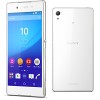
Sony Xperia Z3+ Sony Xperia Z3+ Sony Xperia Z3+ Sony Xperia Z3+ Sony Xperia Z3+ 
Sony Xperia Z3+ press images
Still, the Sony Xperia Z3+ is the company's answer to this season's flagships. But if even Sony doesn't think it's worthy of the Z4 badge, can we really call it a true flagship?
We set out to determine just that, and we kick off with a look at the hardware.
Update: We obtained a retail Sony Xperia Z3+ unit and updated the review with its tests.

Oppo R1x review

Introduction

Always keen to impress with designs, Oppo has yet another eye-catching proposition in the R1x. There's more to it than meets the eye though, and under the neat metal case the Oppo R1x is a capable all-round midranger.
Oppo R1x
The R1x first appeared in its homeland as the R1C and was later on re-branded for the international markets. International has dubious meaning, as the device remains elusive outside of Asia. Even there it's pretty hard to find in online stores.
Limited availability may be the smartphone's greatest flaw, because the actual package has the looks and specs of a winner. The attractive design has a touch of premium, a recipe for success in the packed midrange where styling often gets sacrificed for better hardware.
A 5-inch display offers just enough screen real estate to cater to the average customer, without becoming a burden on the pocket. Meanwhile, the HD panel should strike a decent compromise between resolution and battery efficiency.
The Snapdragon 615 is among the most popular chipsets in the upper midrange and here it's backed up by 2GB of RAM, so a good all-round performance is to be expected.
The R1x is a dual-SIM device, but the second card is limited to 2G networks and it goes into the microSD slot, leaving you with the 16GB of storage only.
There's a 13MP megapixel primary camera on the back behind an f2.0 lens and the front 5MP unit has an equally wide lens for better selfies with available light.

Key features

  • Dual-SIM dual-standby capability, microSD slot shared with second SIM slot
  • 5.0" 720p IPS capacitive touchscreen, 294ppi
  • Octa-core Cortex-A53 CPU (4x 1.7GHz plus 4x 1.0GHz), 2GB of RAM, Adreno 405 GPU; Qualcomm Snapdragon 615 chipset
  • 13MP autofocus camera, single-LED flash; HDR, RAW, Panorama, long exposure (up to 15s), 25MP UltraHD modes
  • 1080@30fps, 480p@120fps video recording
  • 16GB of built-in storage
  • Cat. 4 LTE (150/50Mbps); Wi-Fi b/g/n; Bluetooth 4.0; GPS/GLONASS; microUSB
  • 2,420mAh battery capacity
  • 3.5mm headphone jack, active noise cancellation with a dedicated mic

Main disadvantages

  • No Gorilla Glass protection
  • Android KitKat 4.4.4 isn't quite up to date
  • No FM radio or NFC
  • Non-removable battery
We're slowly coming to terms with user-replaceable batteries being phased out in favor of slimmer profiles and premium designs, which are incompatible with a removable back cover. However, the lack of Gorilla Glass is harder to accept in a device with more upmarket aspirations. Android KitKat doesn't look particularly exciting on a spec sheet these days.
Oppo R1x Oppo R1x Oppo R1x Oppo R1x 
Oppo R1x press photos
Will you hold it against the Oppo R1x or can it make up for these shortcomings? The following pages will hopefully help you decide, starting with the usual unboxing and hardware overview.

Samsung Galaxy S6 Active review

Introduction

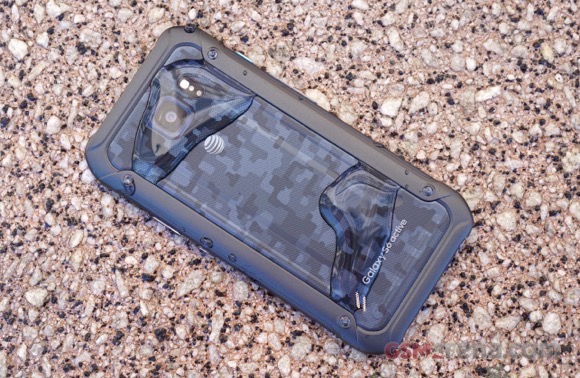
Once again its June and time for Samsung to present us with a rugged version of its latest range-topping smartphone. This year, once more exclusively for AT&T, it is Samsung Galaxy S6 Active that enters the spotlight with camouflage livery, gobs of tech, and tough build.
For a second year in a row, Samsung has made sure that the Galaxy S6 Active is not simply a rugged version of the incumbent flagship by adding unique features to it. Last year, the Korean giant added a customizable shortcut button for quick access to an Activity app.
This year, in addition to the above feature, Samsung Galaxy S6 Active also packs a massive 3,500mAh battery. The latter is roughly 40% larger than the 2,550mAh unit found in the regular model and promises to be a boon for the device's target audience.

Key features

  • MIL-STD-810G certification for salt, dust, humidity, rain, vibration, solar radiation, transport and thermal shock resistance
  • IP68 certification for dust and water resistance (submersible up to 1.5 m of water for up to 30 minutes)
  • 5.1" Super AMOLED of QHD (1440 x 2560) resolution, class-leading ~577ppi, Corning Gorilla Glass 4
  • Exynos 7420 64-bit chipset, octa-core processor with four 2.1GHz Cortex-A57's and four 1.5GHz Cortex-A53 cores, Mali-T760 MP8 GPU, 3GB of RAM
  • Android 5.0.2 Lollipop with TouchWiz UX
  • 16MP camera, f/1.9 aperture, 4K video recording, LED flash, optical image stabilization
  • 5MP front-facing camera, f/1.9 aperture, QHD video, HDR
  • 32GB of built-in UFS 2.0 storage
  • Active noise cancellation via dedicated mic
  • Customizable shortcut button
  • LTE Cat.6, Wi-Fi a/b/g/n/ac, GPS/GLONASS/Beidou, NFC, IR port, Bluetooth 4.1, ANT+
  • Heart-rate sensor, barometer, SpO2
  • 3,500mAh battery; wireless charging (Qi/PMA)
  • No price premium over the regular model (on AT&T)

Main disadvantages

  • Available with only 32GB of onboard memory
  • No microSD card slot
  • Battery is not user-replaceable
  • No stereo speakers
  • No fingerprint sensor
  • Available only for AT&T (at least for now)
  • Gobs of carrier bloatware preinstalled
  • Not exactly a looker
As you can see above, Samsung Galaxy S6 Active is the same technological powerhouse as its regular sibling, but with with added water, shock and dust resistance. After a quick glance, some might even argue that the newcomer is the pick in the Galaxy S6 range thanks to its aforementioned quality and the massive 3,500mAh battery.
Limited availability and memory capacity are the handset's biggest drawbacks at a quick glance, though Samsung might remedy both should it decide to launch an global variant of the device. The lack of fingerprint sensor is arguably another downer, though the target audience for the Samsung Galaxy S6 Active will likely appreciate the sturdier navigation buttons better.
Samsung Galaxy S6 Active Samsung Galaxy S6 Active Samsung Galaxy S6 Active 
Samsung Galaxy S6 Active official photos
As always, we are going to kick the review off with unboxing, followed by our take on the design and build. Head over to the next page for a closer look at the Samsung S6 Active and its camouflage outfit.